If you have followed Ferrari’s sportscar racing efforts over the last 15 years, Toni Vilander is a name that requires no introduction. While the manufacturer’s Formula 1 team often captures the majority of the global spotlight, the Prancing Horse has maintained a remarkably successful GT program running in parallel. For a solid decade, the Finnish driver was central to that success, serving as one of the most reliable and effective factory drivers in the company’s history.
From 2007 to 2017, Vilander built a resume that rivals any driver in the paddock. His tenure covered the transition from the FIA GT Championship to the modern World Endurance Championship (WEC), and saw him pilot three generations of championship-winning cars: the F430 GT2, the 458 Italia, and the 488 GTE. To understand his impact, however, it is necessary to look past the bullet points and examine the consistency and adaptability that defined his career.
The Early Years: From Finland to Maranello
Vilander’s path to professional racing began in Kankaanpää, Finland. Born in 1980, he grew up in the competitive world of Finnish karting, a scene that has produced a disproportionate number of world-class drivers. Most notably, Vilander’s childhood included a close friendship and rivalry with Kimi Räikkönen. The two raced against one another as juniors and served in the Finnish military together. While Räikkönen’s career trajectory took him rapidly to Formula 1, Vilander took a more traditional route through junior formulas, winning the Formula Renault 2.0 Italy championship and competing in Italian Formula 3.
In 2005, Vilander made the strategic decision to switch from single-seaters to GT racing. It proved to be the correct move. After impressive showings in the Italian GT Championship and the GT1 class, he was signed by Ferrari. By 2007, he was a full-time factory driver for AF Corse, the team that essentially functions as Ferrari’s works entry in GT competition.
Dominating the FIA GT Championship (2007–2008)
Vilander’s impact at AF Corse was immediate. Competing in the FIA GT Championship—the precursor to the modern WEC—he was paired with German driver Dirk Müller in the Ferrari F430 GT2. The pair secured the GT2 Drivers’ Championship in 2007, marking Vilander’s first major title with the brand.
The following year, 2008, saw the solidification of a partnership that would define Ferrari’s GT efforts for years: Vilander was paired with Italian driver Gianmaria “Gimmi” Bruni. The two drivers had complementary styles; Bruni was known for his blistering one-lap qualifying pace, while Vilander was celebrated for his race-craft, tire management, and ability to maintain high average speeds over long stints. Together, they defended the title, winning the 2008 championship and securing the Manufacturers’ Cup for Ferrari. This era established the F430 as the benchmark for the class and proved that AF Corse was the team to beat.
Success at Le Mans and the WEC Title
The 24 Hours of Le Mans is the ultimate measuring stick for an endurance driver, and Vilander’s record at the Circuit de la Sarthe is exceptional. He has achieved two class victories and four additional podium finishes, a testament to his reliability in 24-hour races.
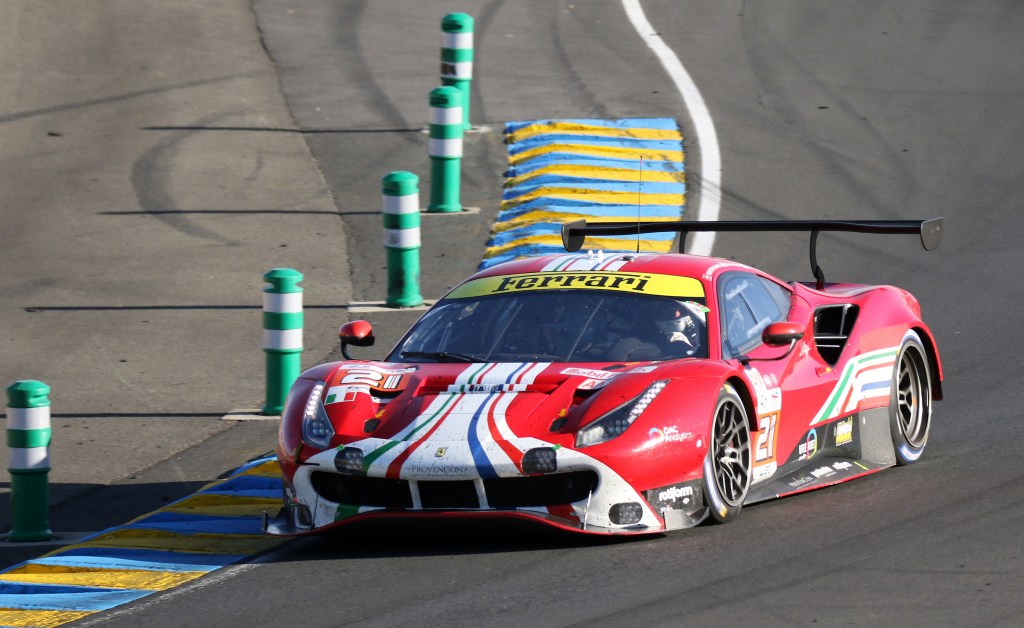
His first win in 2012 was a victory of resilience. Driving the #51 Ferrari 458 Italia with Bruni and Giancarlo Fisichella, the team faced a crisis before the race even began when the car was heavily damaged in a practice crash. The AF Corse mechanics worked tirelessly to rebuild the chassis in time for the race. Starting from the back of the grid, the drivers worked their way through the field. In a highly competitive GTE Pro class featuring factory efforts from Aston Martin and Corvette, the #51 car took the lead and held it, delivering an emotional win for the team.
Two years later, in 2014, the same trio returned to dominate the event. The GTE Pro class was arguably at its peak, with Porsche returning to the fray, but the Ferrari 458 Italia proved untouchable. Vilander and his teammates ran a flawless race to secure his second Le Mans victory. That win was the centerpiece of a championship season, as Vilander and Bruni went on to win the World Endurance Championship (WEC) GT Drivers’ title, confirming their status as the best pairing in the world that year.
Winning Across the Globe: IMSA and Bathurst
Vilander’s value to Ferrari extended beyond the European circuits. He was frequently deployed to support customer teams in major endurance races in North America and Australia, often elevating those teams to race-winning contention.
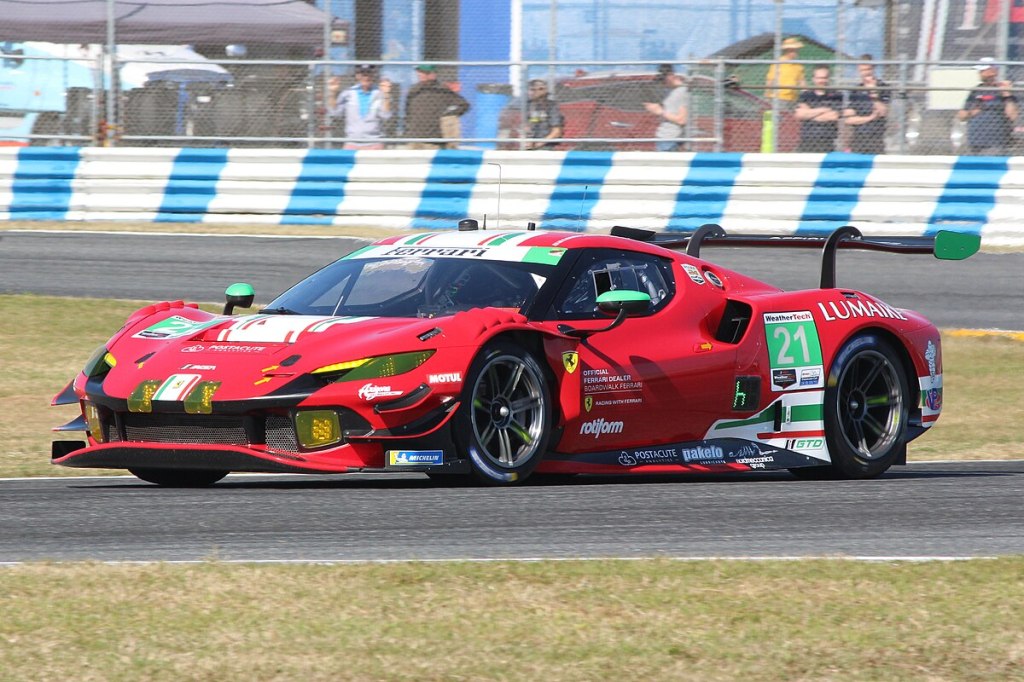
In 2016, he joined Risi Competizione for the Petit Le Mans at Road Atlanta, the season finale for the IMSA WeatherTech SportsCar Championship. The 10-hour race is notoriously difficult due to the high traffic density on a relatively short track. Driving the new Ferrari 488 GTE, Vilander, alongside Fisichella and James Calado, navigated the chaos to take the GTLM class victory. It was a significant win for Risi Competizione and highlighted Vilander’s ability to jump into the US series and perform immediately.
Perhaps his most impressive “plug-and-play” performance came at the 2017 Bathurst 12 Hour in Australia. The Mount Panorama Circuit is widely considered one of the most dangerous and difficult tracks in the world. Vilander joined the local Maranello Motorsport team, partnering with Australian Supercars legends Craig Lowndes and Jamie Whincup.
Despite having significantly less experience at Bathurst than his Australian teammates, Vilander was immediately on the pace. He played a crucial role in the car’s setup and matched the lap times of the local experts. The race ended in a tense showdown, but the Ferrari 488 GT3 held on for the win. For Vilander to arrive at Bathurst and win on his debut was a clear demonstration of his adaptability.
Insight from the Paddock
Beyond his driving, Vilander provided fans with a rare technical perspective through his writing. Starting in April 2015, he contributed a series of columns to Sportscar365. These weren’t standard press releases; they were detailed debriefs of his race weekends.
In these posts, he discussed the specific challenges of different circuits, the complexities of multi-class racing, and the physical demands of the WEC schedule. For readers interested in the technical side of the sport, his archives offer a genuine look at the life of a factory driver during the height of the GTE era. You can read his past entries here: https://sportscar365.com/author/tonivilander/
The Ambassador Role
Currently, Toni Vilander has moved away from a full-time racing schedule, transitioning into a role as a Ferrari “Ambassador Driver.” While this title sounds honorary, it involves significant responsibility within Ferrari’s commercial and client-facing operations.
In this capacity, Vilander works closely with the “Corse Clienti” department. He is a fixture at events like the Ferrari Finali Mondiali and exclusive track days for the XX Programme and F1 Clienti. His job is to coach high-profile customers, helping them extract performance from some of the most advanced track cars in the world. He also represents the brand at the 24 Hours of Le Mans and other major events, maintaining relationships with customer teams.
Vilander’s shift from the lead car to the ambassador role marks the end of an era, but his influence remains. He was a foundational piece of Ferrari’s modern GT dynasty, helping to develop and race the cars that filled Maranello’s trophy cases for a decade. For Scuderia Scout, Toni Vilander remains one of the most significant figures in recent sportscar history.
We wish him continued success in his work with Ferrari!

Scouting the top drivers coming out of Maranello
 Scuderia Scout
Leave a comment